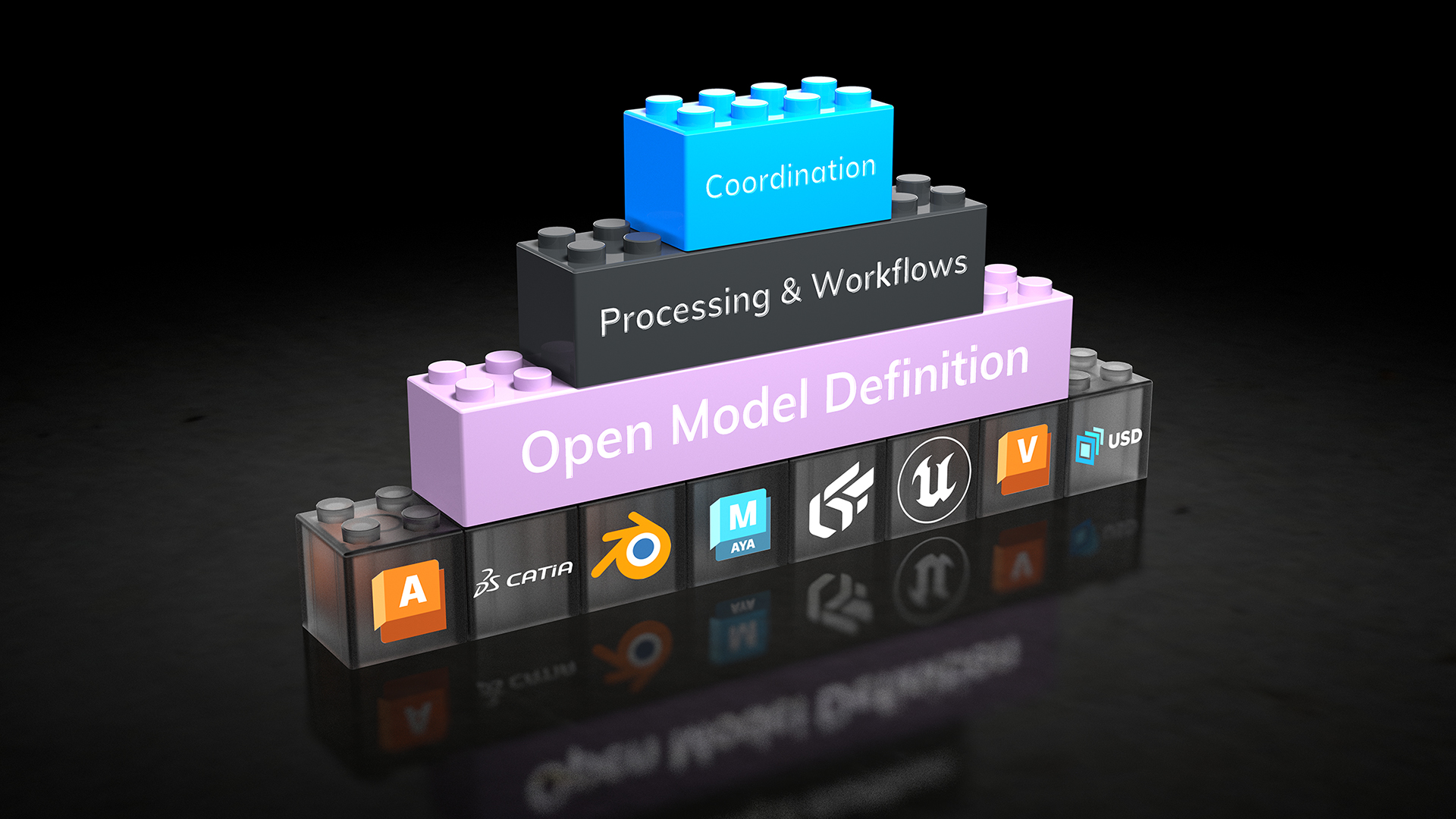

Drivers
They connect a software to the 3D Digital Backbone to exchange its data as native values, untransformed.






Bridges
They transform one native data format, as stored by a Driver, into another native data format.
Available tools
Here are the first tools to help you integrate the Digital Substrate‘s Digital Backbone into your 3D visual production process for marketing.
⚠ Warning: they are in alpha or beta stage, please use them carefully.
Blender Driver
Blender Driver is an extension for Blender that connects it to the 3D Digital Backbone.
Try it with the free evaluation. If you like it, let us know; we’d be pleased to hear from you.

Blender
4.3 → 4.5

Windows x64

macOS 15
Apple Silicon

Linux x86
glibc 2.28+
Free evaluation
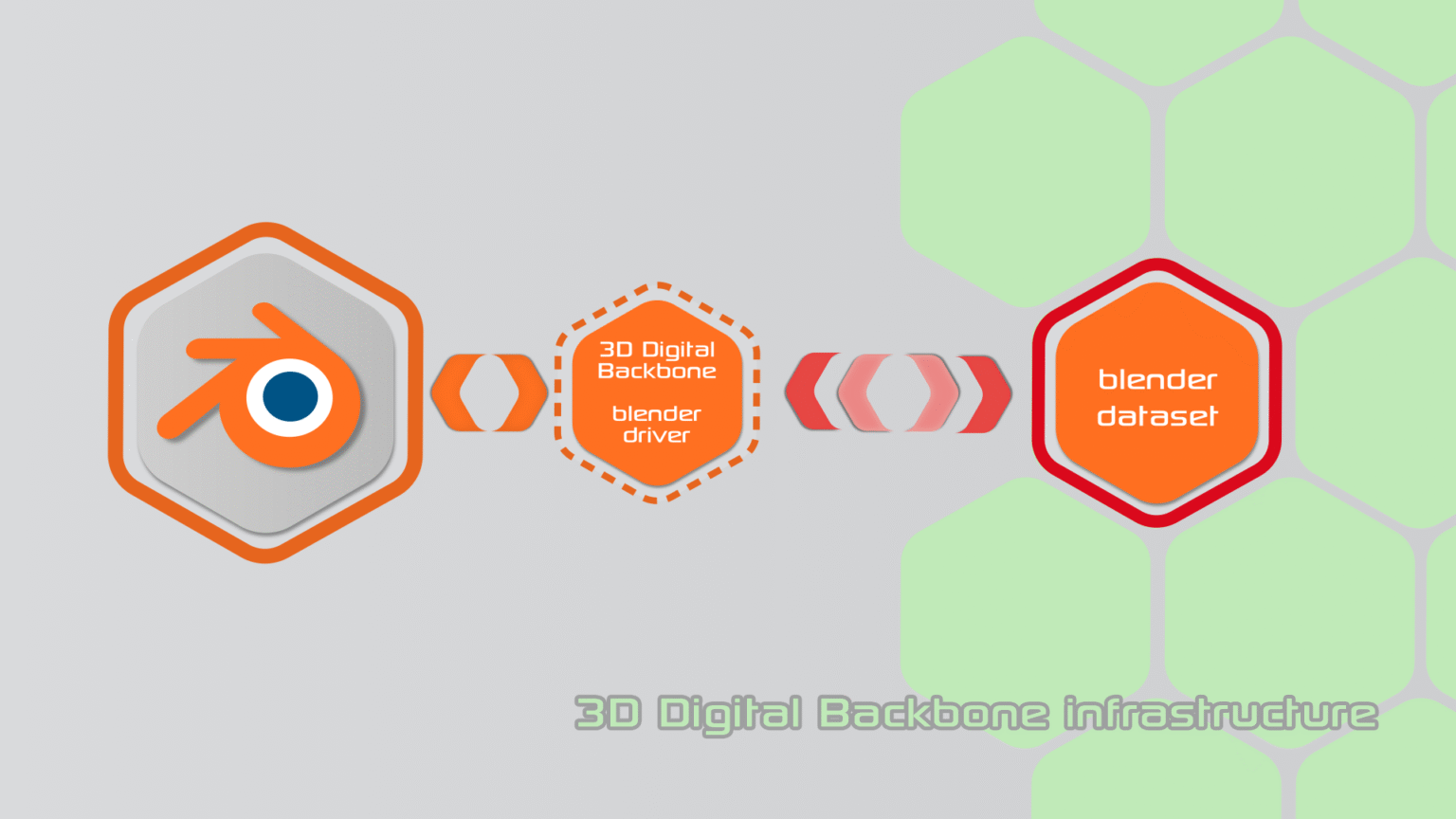
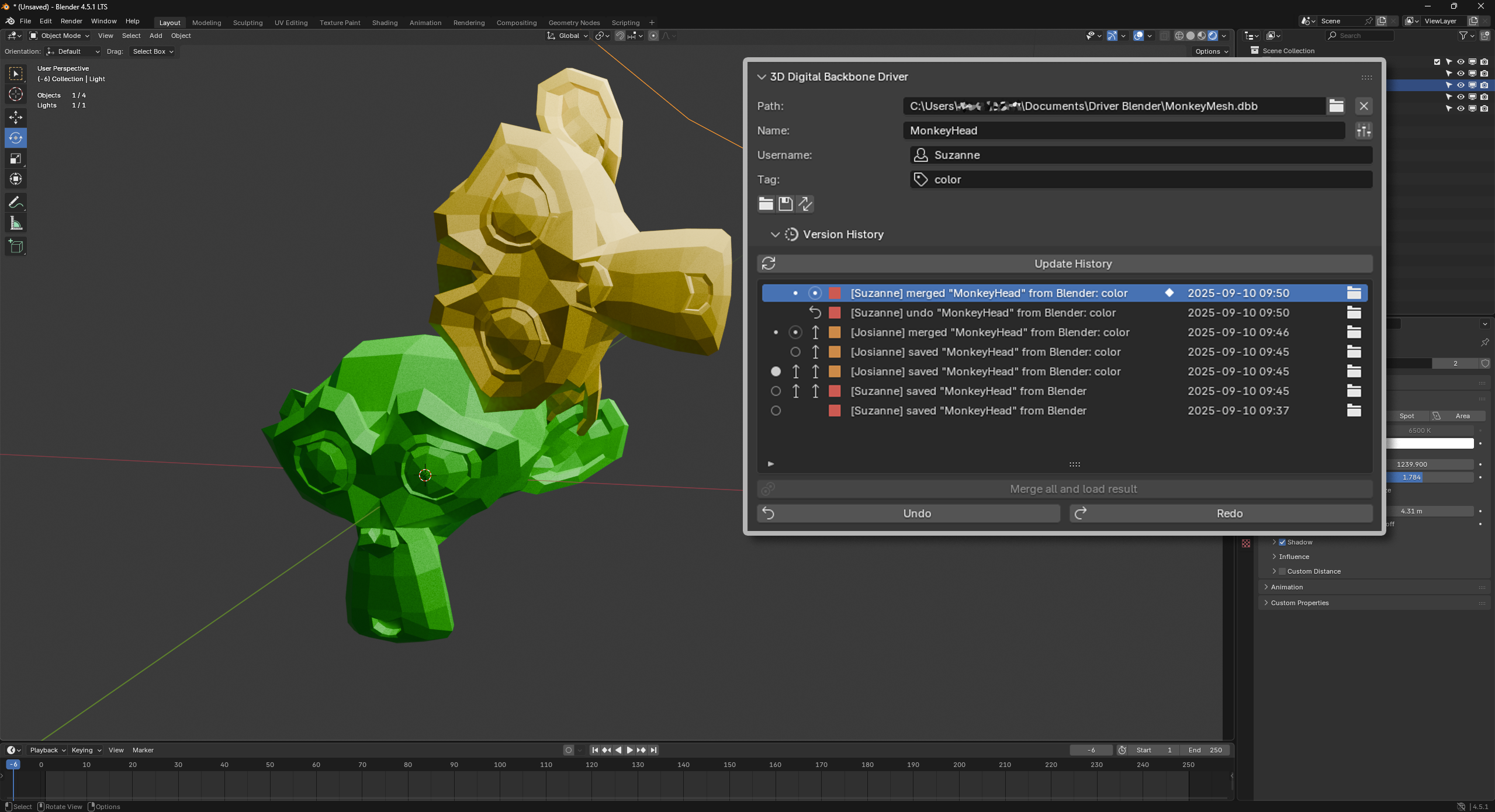
It adds the ability to save and load your scenes in a 3D Digital Backbone database, with the following benefits:
- preserve the history of changes
- work collaboratively on the same scene, online or offline
- use the native data in other software and scripts (no export)
Demo
Here is a simple example of collaboration between two Blender instances using the Lumiscaphe extension.
Each user works on a different aspect of the scene (environment, materials), then saves their changes to the shared database.
The 3D Digital Backbone enables automatic merging of contributions, showcasing a seamless collaborative workflow that requires no changes to existing tools.
Collaboration example between 2 Blender instances through the 3D Digital Backbone
In development
Here are tools that are under development and not ready for production yet .
These tools are under active development. Subscribe below to be notified as soon as they become available.
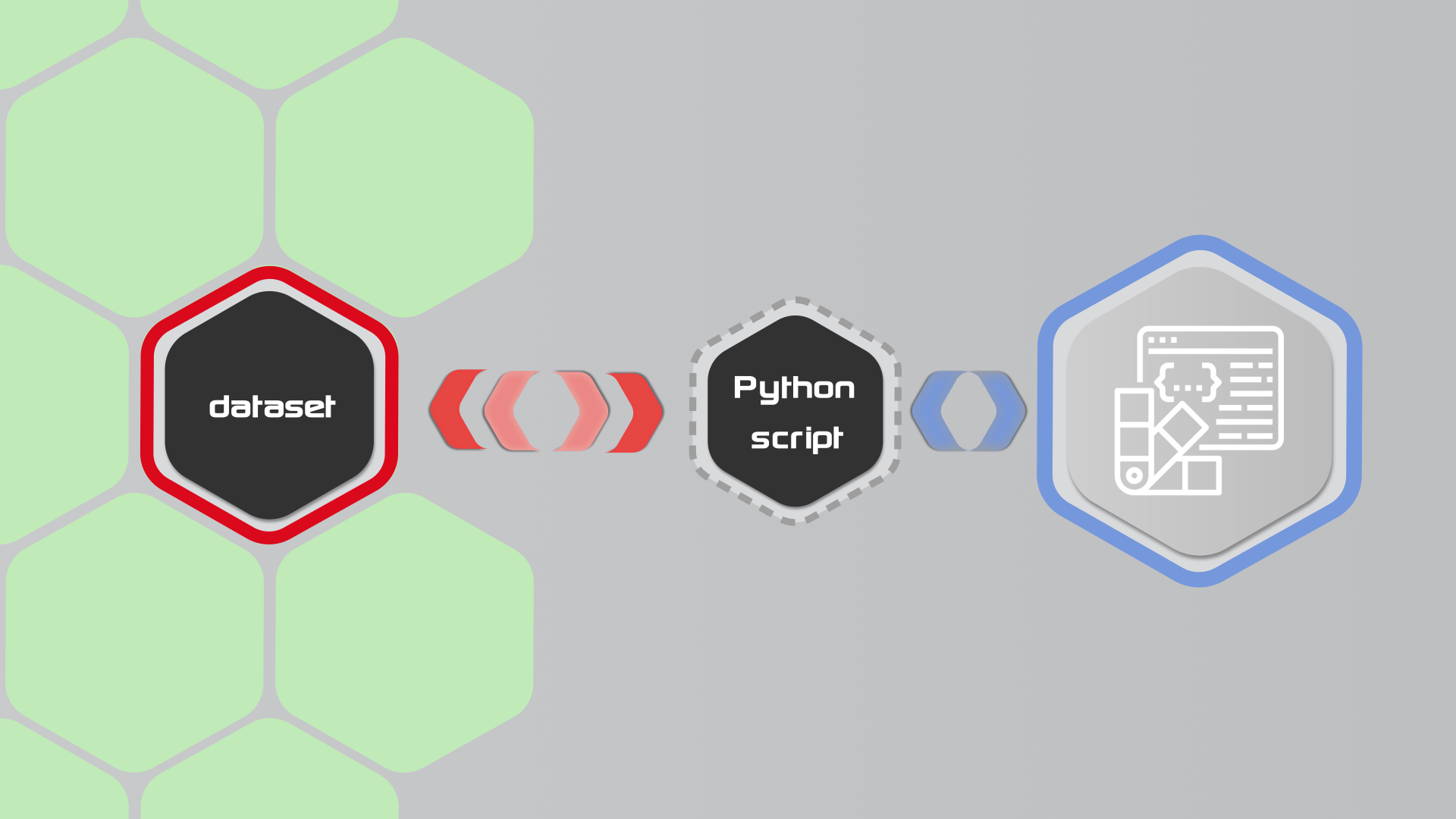
Easy access to all datasets stored in the Digital Backbone through Python scripting
Python Scripting
Our 3D Digital Backbone Access Kit for Python is coming!
This kit will allow you to access and manipulate any datasets (Blender, VRED, Unreal, etc.) from a Digital Backbone file through Python scripting.
In the first version, you’ll be able to get and modify the data from the Blender scene saved by the Blender Driver add-on.
VRED Driver
We’re developing a 3D Digital Backbone Driver for Autodesk VRED!
This short demo video shows a simple example of collaboration between two VRED users via the 3D Digital Backbone.
Each user works on a different aspect of the scene based on a shared database. Changes are centralized, merged, and then re-uploaded to both VRED instances, demonstrating seamless collaboration between users.
Collaboration example between 2 VRED instances through the 3D Digital Backbone
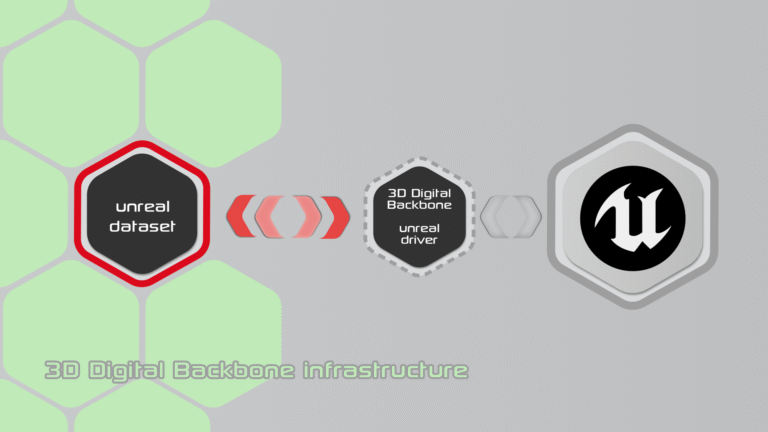
The Unreal Driver inputs/outputs the Unreal scene as an original dataset in the 3D Digital Backbone
Unreal Engine Driver
We’re developing a 3D Digital Backbone Driver for Unreal!
Patchwork 3D Driver
We’re developing a 3D Digital Backbone Driver in Patchwork 3D to expose the full P3D DAM!
It will enable powerful uses of the DAM in other software and scripts, directly or via bridges.
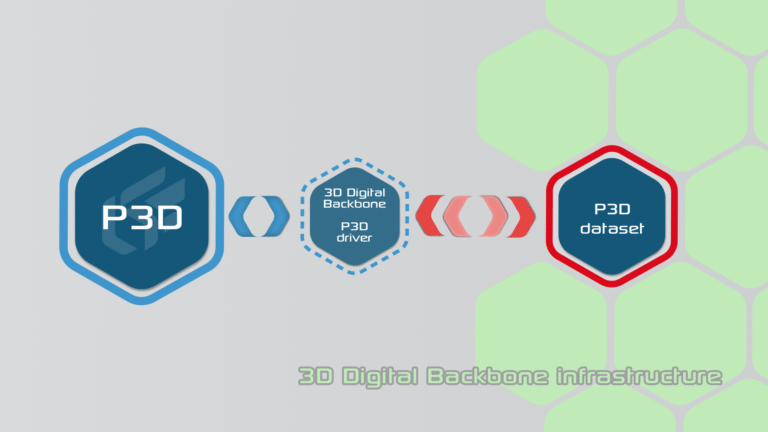
The Patchwork 3D Driver input/output the P3D DAM as an original dataset in the 3D Digital Backbone
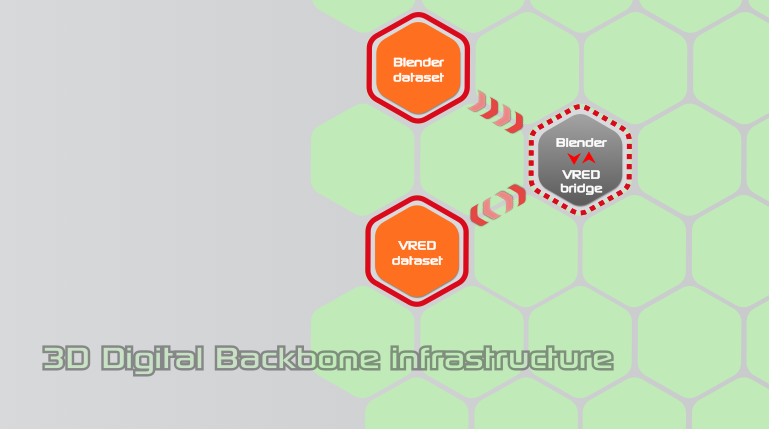
The Blender to VRED Bridge transforms a Blender dataset into a ready-to-use VRED dataset
Blender to VRED Bridge
This tool will provide a “standard” conversion from a Blender dataset to a VRED dataset directly in the 3D Digital Backbone.
Through the VRED Driver add-on, you’ll then be able to work on the result dataset natively in VRED.
VRED to Unreal Engine Bridge
This tool will provide a “standard” conversion from a VRED dataset to an Unreal Engine dataset directly in the 3D Digital Backbone.
Through the Unreal Engine Driver add-on, you’ll then be able to work on the result dataset natively in Unreal Engine.
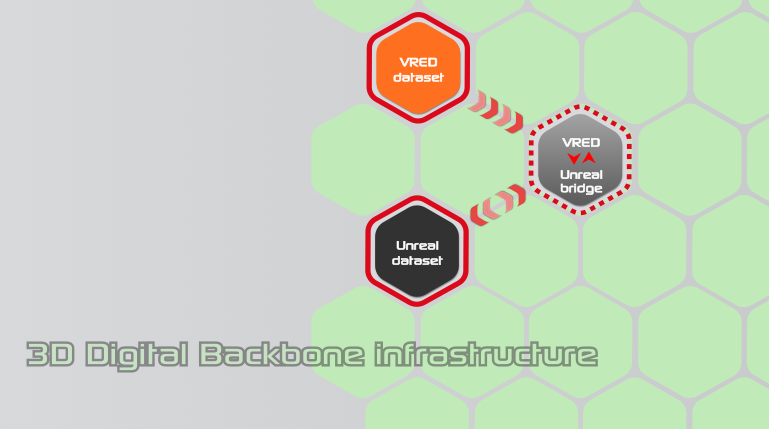
The VRED to Unreal Engine Bridge transforms a VRED dataset into a ready-to-use Unreal Engine dataset
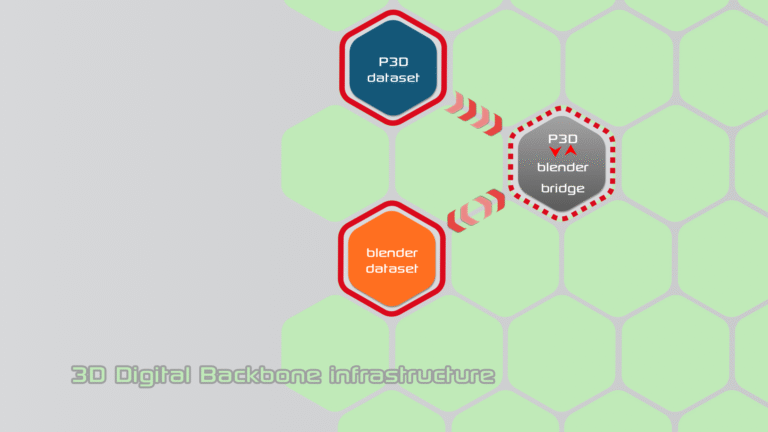
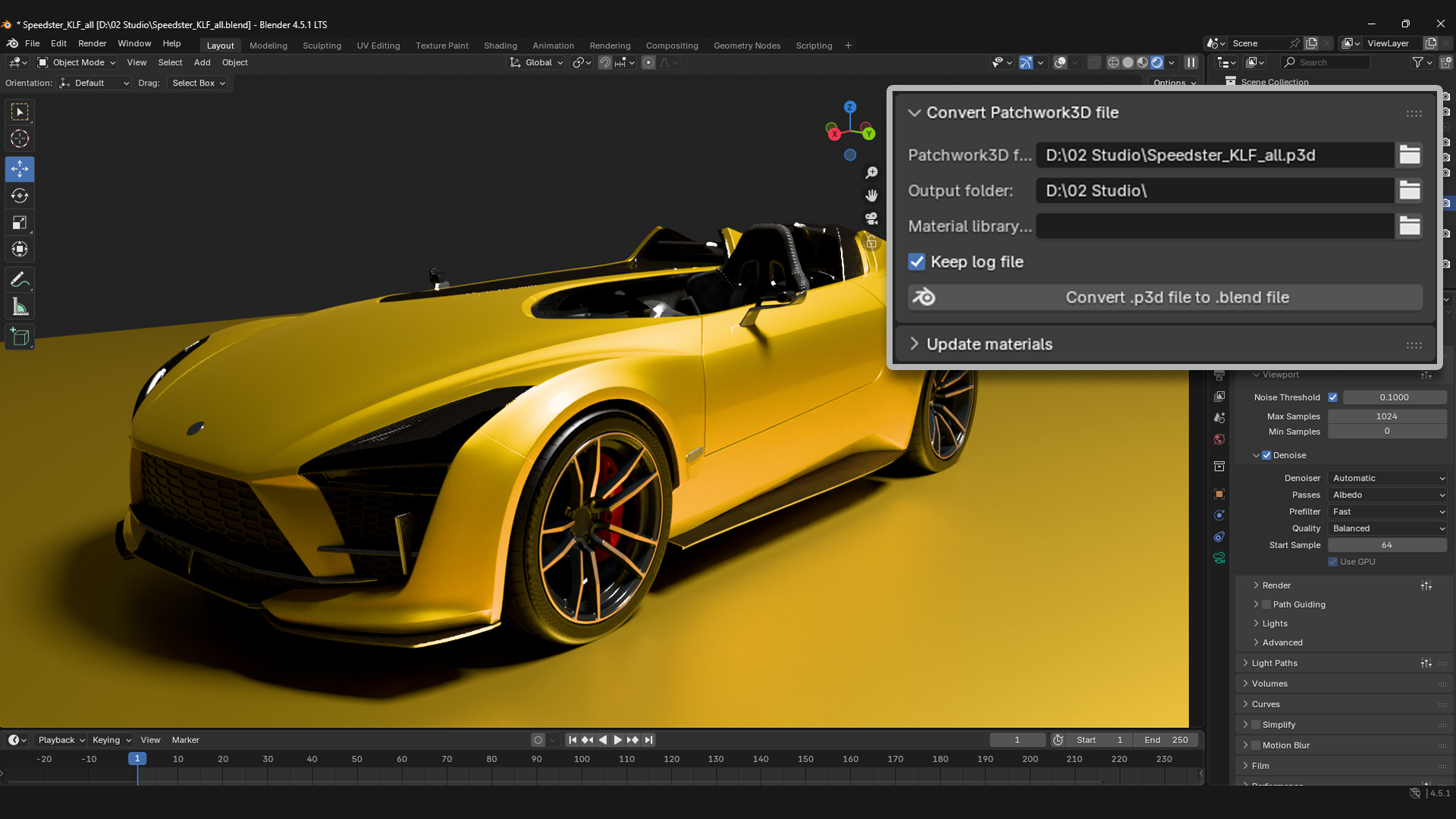
The P3D to Blender Bridge transforms a P3D dataset into a ready-to-use Blender dataset
Patchwork 3D to Blender Bridge
This tool will provide a “standard” conversion from a Patchwork 3D DAM to a Blender scene directly in the 3D Digital Backbone.
Through the Blender Driver add-on, you’ll then be able to work on the result dataset natively in Blender.
This is just the beginning. We will continue to develop drivers and bridges for other software through the 3D Digital Backbone according to your requests.
More about the 3D Digital Backbone
The dedicated 3D Digital Backbone main page explains all its advantages:
Interested in any of the tools above? Subscribe below to get notified as they become available.
Stay tuned

The information provided through this form is processed by Lumiscaphe to notify you about software updates and news, based on your consent. This form is protected by Google reCAPTCHA, acting as a data processor on our behalf. You may unsubscribe at any time using the link included in each email. To exercise your rights or learn more, please read our privacy policy or contact us.
Questions?
Do you need technical support to get it working? Send your case to support@lumiscaphe.com.
Would you prefer to have assistance in setting up your process? For any non-technical questions, contact us here: